ABOUT GBC
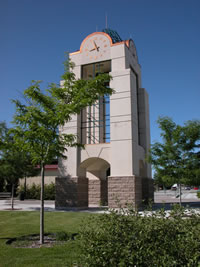
Welcome to Great Basin College!
Great Basin College values you! Valuing what we have in common and our differences means we will foster a college climate of mutual trust, tolerance, informed discourse and always seek to promote GBC as a "safe space" to explore new ideas and perspectives with opportunities for you to grow, learn and be successful in a friendly, supportive campus environment. GBC enriches people's lives by providing student-centered, post-secondary education to rural Nevada. GBC students enjoy outstanding academic programs, smaller class sizes, and excellent faculty who really care about our students. We are GBC!
ADMISSIONS

ACADEMICS

For High School Students
STUDENT SERVICES
GBC ONLINE

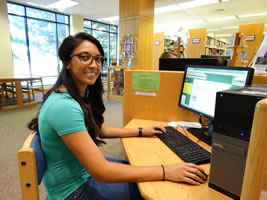
Great Basin College is "The Gold Standard in the Silver State" when it comes to long-distance education and online education delivery. GBC offers hundreds of classes and a diverse array of certificate and degree programs fully online and fully affordable!
COMMUNITY
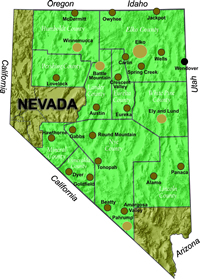
Great Basin College wants to be your choice for higher education. GBC offers associate and baccalaureate level instruction in career and technical education and academic areas. About 4,000 students are enrolled annually online from across the country and on campuses and centers across 86,500 square miles, two time zones, and ten of Nevada's largest counties. We border Arizona, Oregon, Idaho, Utah, and California. We are GBC!
INFORMATION

Need to find COVID-19 information quick? Check out our Coronavirus (COVID-19) Information and Resources page!

RESOURCES

Child and Family Center Curriculum
Our curriculum objectives include the State of Nevada Pre-Kindergarten Standards for our Pre-Kindergarten classes and blend with our overall program to provide experiences and materials that will help the children develop the broad language and logical abilities that are the foundation for later academic learning, creative thinking, and positive social interaction. We also strive to maintain the high standards for learning as set forth by the National Association for the Education of Young Children (NAEYC).
Our daily themes are literacy-based. Each classroom’s schedules, daily plans, and objectives are developed from the following modules:
- The Self-Concept Curriculum unfolds following the development of the child in a natural, logical, and sequential process. This model recognizes the child at the heart of the curriculum and takes into account the types of experiences that will enhance the child’s development and what is relevant to him or her.
- The Anti Bias Curriculum prepares children with an early educational experience that teaches acceptance, respect, and cooperation for all peoples in the classroom and in the community.
- The Creative Curriculum recognizes that the classroom environment serves as an effective teaching tool. The environment also enhances both fine and gross motor development through a range of challenging equipment and materials. Each classroom includes the following learning stations: Domestic Play, Blocks, Manipulatives, Library Science/Math, Sand and Water, Creative Arts, Language Arts (Oral Languages and Writing Center) and Computer.
Zaner-Bloser Handwriting & Alphabet Introduction: Developmentally appropriate handwriting instruction, delivered in a consistent, ongoing manner, is a proven critical component of overall literacy development. This curriculum will:
- support early reading and writing development through print awareness and improved letter recognition,
- strengthen students' ability to self-regulate,
- encourage ongoing literacy growth to improve written communications, and
- reduce the need for handwriting-related intervention.
Homework on Wheels: Once a month all pre-kindergarten children will roll home a backpack on wheels that will contain a book and directions for activities that relate to the story. Parents/guardians will read the story to their child and help them with the activity. This promotes quality time with parents and literacy learning skills. The backpacks and activities are due the following preschool day.
Goals of Our Curriculum
The most important goal of our early childhood curriculum is to help children become independent, self-confident, inquisitive and enthusiastic learners. Our curriculum and daily lesson plans incorporate cognitive and social learning goals and objectives and the state of Nevada’s Pre-K standards. The following areas of development are included in the Child Center’s curriculum and daily lesson plans:
- Creative: Definitions include such concepts as originality, imagination, divergent thinking (seeing things from a different perspective), and the ability to create something new or to combine materials in novel, but meaningful ways.
- Cognitive: This is the process of mental or intellectual development. This area helps children to acquire learning skills such as the ability to solve problems, ask questions and to understand and use words to describe their ideas, observations and feelings. Cognitive development allows children to learn and understand the following skills and concepts: colors, numbers, shapes, one-on-one correspondence, etc.
- Emotional: Children learn to internalize standards of what is right and wrong. Children learn to convey fairness, consistency, respect and empathy for others.
- Language: Children’s language develops from a combination of inborn and environmental factors. Children’s language skills develop through oral communication, listening activities, letter recognition, rhymes, storytelling, social skills, sight vocabulary and writing skills.
- Physical: Through gross or large motor activities, children can develop coordination, strength, large muscles, physical fitness, and social skills.
- Fine Motor Development: Small muscles are developed through grasping, holding, cutting, and drawing.
- Gross Motor Development: Large muscles are developed through outdoor play, creative movement, and specific physical education games.
- Social: Through acquiring social skills, children will learn acceptance, respect, and cooperation in the classroom and in the community.
- Auditory and Visual Perception: Auditory discrimination of sounds and words and visual recognition of shapes, letters, words, colors, etc.
For More Information Contact
GBC Child and Family Center
Great Basin College
Elko Campus (map #20)
Phone: 775-327-2387
FAX: 775-327-5092
E-mail: tiffany.steensen@gbcnv.edu
Front Office Hours
Monday - Friday
7:30 am - 4 pm
Why Great Basin College
Great Basin College wants to be your choice for higher education. GBC offers associate and baccalaureate level instruction in career and technical education and academic areas. About 4,000 students are enrolled annually online from across the country and on campuses and centers across 86,500 square miles, two time zones, and ten of Nevada's largest counties. We border Arizona, Oregon, Idaho, Utah, and California. We are GBC!